

Mapping Wake
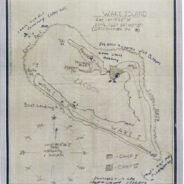
When it comes to drawing a map of a place, Wake Island is about as easy as it gets. The small Pacific atoll is small, distinctive in shape, and practically begs the casual observer to try his hand at cartography. The familiar outline of Wake atoll has been variously described as a wishbone, horseshoe, or simply V-shaped, with the three islets – Peale, Wake proper, and Wilkes – flanking a shallow lagoon that opens wide to the west. During my research for Building for War I was drawn to the many maps of Wake that I encountered from hand-drawn...
read moreWake 98 Hero
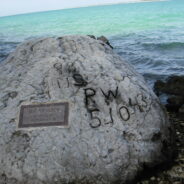
Among the ninety-eight Americans murdered by the Japanese on Wake Island in 1943 was the civilian doctor, Lawton Shank, who had provided and coordinated vital medical services during the siege and battle of Wake in December 1941. Numerous sources attest to Dr. Shank’s continuing medical services through the difficult transition to captivity on Wake and, after the majority of prisoners were shipped out in January 1942, for the nearly four hundred Americans who remained on Wake for nine more months. When the last 265 prisoners to leave Wake...
read moreWake Beaches
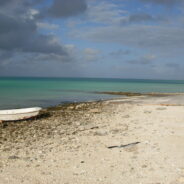
For a small atoll of less than four square miles total land mass, Wake Island has a lot of beach. Together Wake, Peale and Wilkes form a narrow wishbone-shaped coral island that opens wide to the west. Linear distance tip to tip to tip is about ten miles, but altogether the coastline – including both sea-facing and lagoon shores – exceeds twenty miles. Comprised entirely of bleached, broken coral and ledges, none of it is “barefoot beach,” but it has a striking beauty all of its own. As the U.S. Marine detachment prepared defenses on Wake...
read moreDraw It, 1941
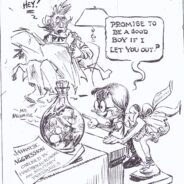
Drawings may look simple on the surface, but they convey complex messages about both the subject and the person making the drawing. During my research for Building for War I encountered many line drawings from 1941: some were professional and purposeful, others were personal sketches found in letters and diaries. I found them as revealing as the written primary sources on which I based much of the book, but only one made it into the published book (a map of Wake, sketched by my grandfather in a letter. The Wake maps are fascinating and occupy...
read moreThe Northwest Connection
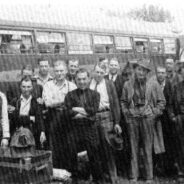
The Depression-era workers who hired on for the big prewar navy construction projects in the Pacific came from many states, but a good number hailed from the Pacific and Inland Northwest. In 1939-40 the navy contracted with a consortium of big construction companies to build naval air stations and facilities on Oahu, Palmyra, Johnston, Midway, and Wake Island (and later in the western Pacific at Guam, Cavite in the Philippines, and American Samoa). One of the eight contracting companies was Morrison-Knudsen Company, headquartered in Boise,...
read moreThe Wake 98
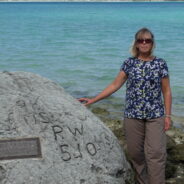
Every few weeks I write a post to highlight the ongoing mission of the Joint POW-MIA Accounting Command (JPAC) to locate family members of the 98 men massacred on Wake Island in 1943 for possible DNA matches. For more information, see my November 2012 post on the JPAC Mission. This week I want to talk about the nearly 100 men who drew their last breath on the north beach of Wake, October 7, 1943. When the Tachibana Maru pulled away from Wake Island on September 30, 1942, it sailed for Japan carrying 265 American civilian prisoners of war –...
read moreWake Island Birds
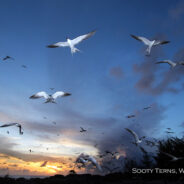
Wake’s human population may be small these days, but the neighborhoods are full to bursting with birds (see video link below!). The remote, isolated atoll has hosted a wide variety of migratory and resident seabirds for time out of mind. The ravages of the WWII Japanese occupation and postwar feral cat predation left indelible marks, but researchers are encouraged by signs of robust recovery across the atoll. During my visit to Wake in the fall of 2011 I was captivated by the graceful white terns that would appear from the trees on Wake and...
read moreThe Old “Color Line”
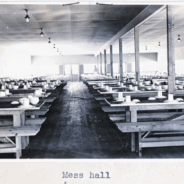
If you had looked in the mess hall on Wake Island at dinner time on any given day in 1941, you would have seen a sea of white faces. Some bore dark tans from hours in the tropical sun, but most were Caucasian except for a few Pacific Islanders and a couple dozen Chinese Americans. The “color line” was a wall against equal opportunity: preferential hiring, segregation of workers, and ethnic biases were entrenched in the construction camps and defense factories in the prewar period. In June 1941, A. Philip Randolph, prominent...
read moreWilkes
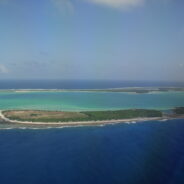
Wilkes Island, the southwest arm of Wake atoll, bears a wartime scar that may never heal. Halfway along the lagoon side the shore juts sharply inward, nearly bisecting Wilkes. Only a narrow strip of land remains, cluttered with concrete blocks and nearly submerged at high tide, to connect to the western end. The indentation may appear natural to the casual observer but folks familiar with Wake and its history know that it is “man-made.” The altered coastline is visible on every map and aerial photograph of Wake – even the one from the...
read moreHonor in Death
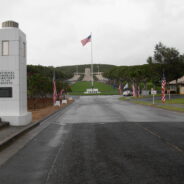
No straight road leads to the National Memorial Cemetery of the Pacific in Honolulu. Winding up the narrow streets past modest houses and bright splashes of bougainvillea you only know that if you are still ascending your destination is surely ahead. At the top the Punchbowl opens up wide, a cemetery like no other, dedicated to those who lost their lives in World War II in the Pacific and the Korean and Vietnam Conflicts. Puowaina Crater, once the site of royal Hawaiian burials and sacrifices, is now the final resting place of tens of...
read more