

Christmas 1941
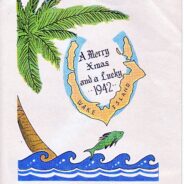
Many Wake Island men sent cards and holiday gifts by ship’s mail in late November 1941, timed to reach loved ones at home just before the upcoming Christmas holiday. Some of the fellows reached deeper into their pockets to pay airmail rates and sent their cards on the eastbound Pan American Clipper. Despite the war clouds gathering over the Pacific, few on Wake worried that anything would hold up the mail unless Mother Nature cooked up another typhoon in the neighborhood. The Wake “multigraph” machine churned out cheery cards for employees to...
read morePan American
Pan American Airways was the first to establish a permanent settlement on Wake Island. Late in 1934 the commercial airline obtained permission from the U.S. government to build stations on Wake and Midway Islands for its transpacific Clipper operation. Protected lagoons offered calm waters for seaplane runways, though divers would have to blast many coral heads and shelves for safe depths. When operational the mid-Pacific stations would provide vital links in the chain linking the West Coast and Asia. The North Haven, Pan American’s supply...
read moreLiving in Infamy
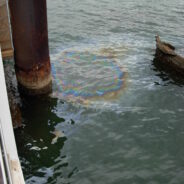
December 7 carries a big burden. President Roosevelt had it right: this date lives in infamy. For Americans it will always be associated with the horrific Japanese attack on Pearl Harbor in 1941. Every year on this day solemn ceremonies honor the lives lost and the irreversible descent into World War II. The hard-hit Pacific Fleet base at Pearl Harbor carries the banner, although the Japanese also targeted numerous other military installations on Oahu and across the Pacific, including Wake Island. Infamy is a loaded word: it conjures up a...
read moreJPAC Mission
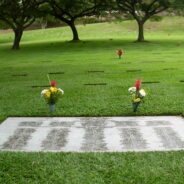
A significant discovery of skeletal remains occurred on Wake Island in the spring of 2011 when the beach eroded on the north shore. The Joint POW-MIA Accounting Command (JPAC) sent a team of forensic anthropologists to recover the bones and examine the site. JPAC, based at Joint Base Pearl Harbor-Hickam, sends forensic anthropologists all over the world to investigate and recover remains from our nation’s wars. DNA analysis is employed to identify the victims and bring closure to their families. JPAC has reason to believe that the remains...
read moreDiving Wake
I promised myself that if I ever got to Wake Island I would do just about anything to dive there. Not only is it a diverse and robust marine environment, but much of Wake’s history is tied to that obstinate coral reef, especially on the south side. The encircling reef comes closest to shore off Wilkes and Wake, making it the only viable option in 1941 for the close approach of ships – both friend and foe. On December 1, 2011, our two small dive boats left the sheltered marina and headed seaward through the Wilkes channel that my grandfather...
read morePostwar Wake Island

After the Japanese surrendered Wake Island at the end of World War II, the United States Navy resumed authority over the atoll. Within a couple of years the navy turned administration over the Department of Commerce, and the CAA (FAA after 1958) maintained airfield operations from 1947 to 1972, paving and extending the runway. Commercial airlines including Pan American Airways and Transocean Airlines established facilities on Wake and military and other aircraft regularly stopped in for fuel. Numerous government agencies and commercial...
read more